The Apache Hop community is happy to announce the release of Apache Hop 2.19!
This release brings the largest set of changes we’ve delivered so far: 22 contributors, including 6 first-time contributors, worked on new features, improvements, and fixes over the past three months, closing 337 issues.

Or download Hop 2.19.0 and give it a try.
The Marketplace
The biggest change in 2.19 is the introduction of the Hop Marketplace. Plugins can now be installed, updated, and managed directly from the Hop GUI.
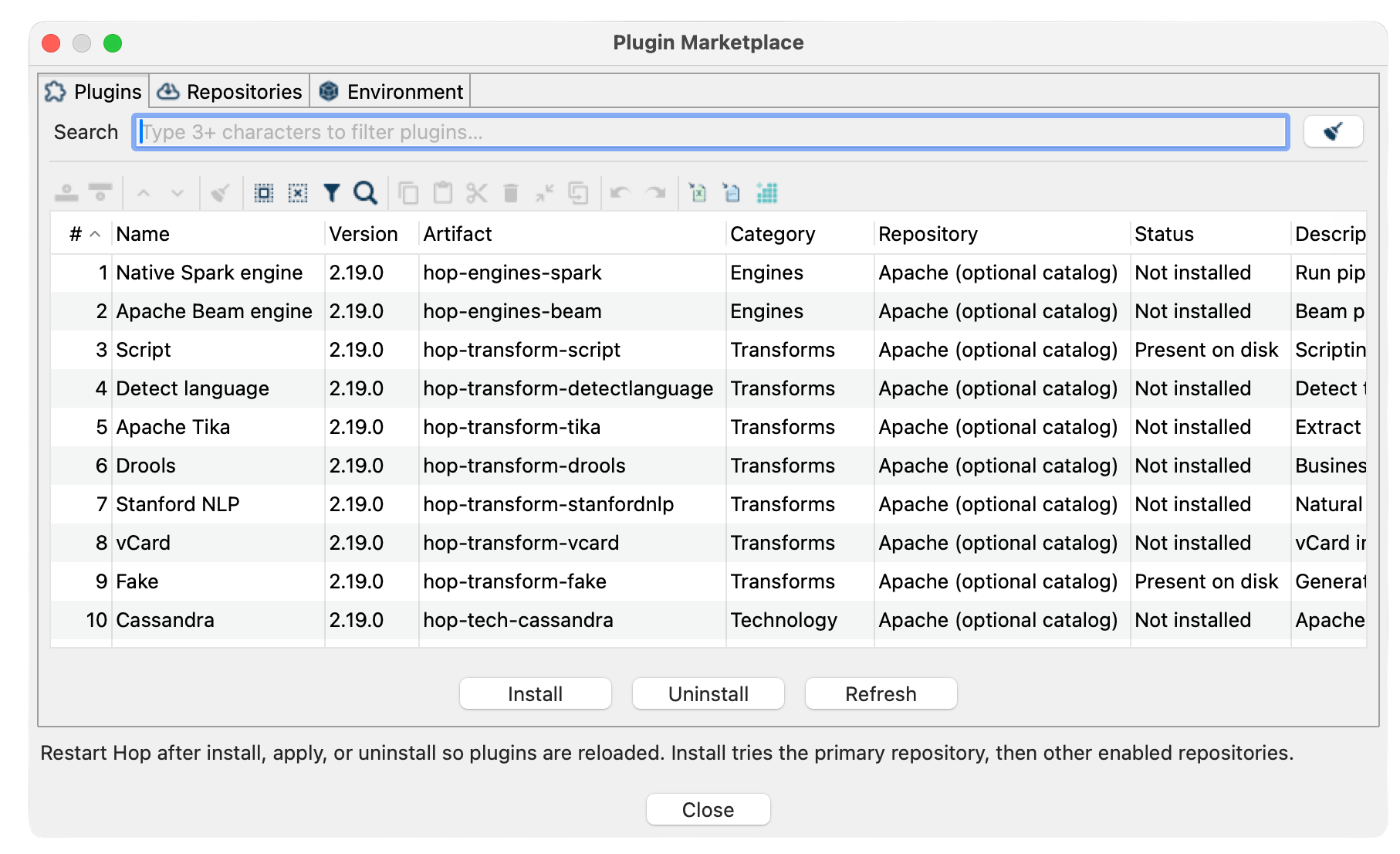
This removes the need for manual downloads and copying JAR files into plugin directories. The Marketplace supports GitHub, Forgejo, and Gitea registries and will continue to evolve as more plugins become available.
Native Spark engine
Apache Hop 2.19 introduces a dedicated Spark pipeline execution engine and a native Spark SQL transform. Both components are built specifically for Spark execution and are independent from the Beam-based execution engine. Users running Hop workloads on Spark can now take advantage of native Spark support.
Databricks file system support
Databricks Unity Catalog Volumes (Files API) are now available as a supported VFS. Hop can read from and write to Unity Catalog Volumes through file-based transforms, using the same approach as other supported file systems.
Append support for Cloud File systems
Append operations are now supported across all major cloud storage providers: GCS, Azure, and S3. This brings consistent append behavior across Hop’s cloud file system integrations.
SFTP metadata type
SFTP is now available as a dedicated metadata type in Hop.
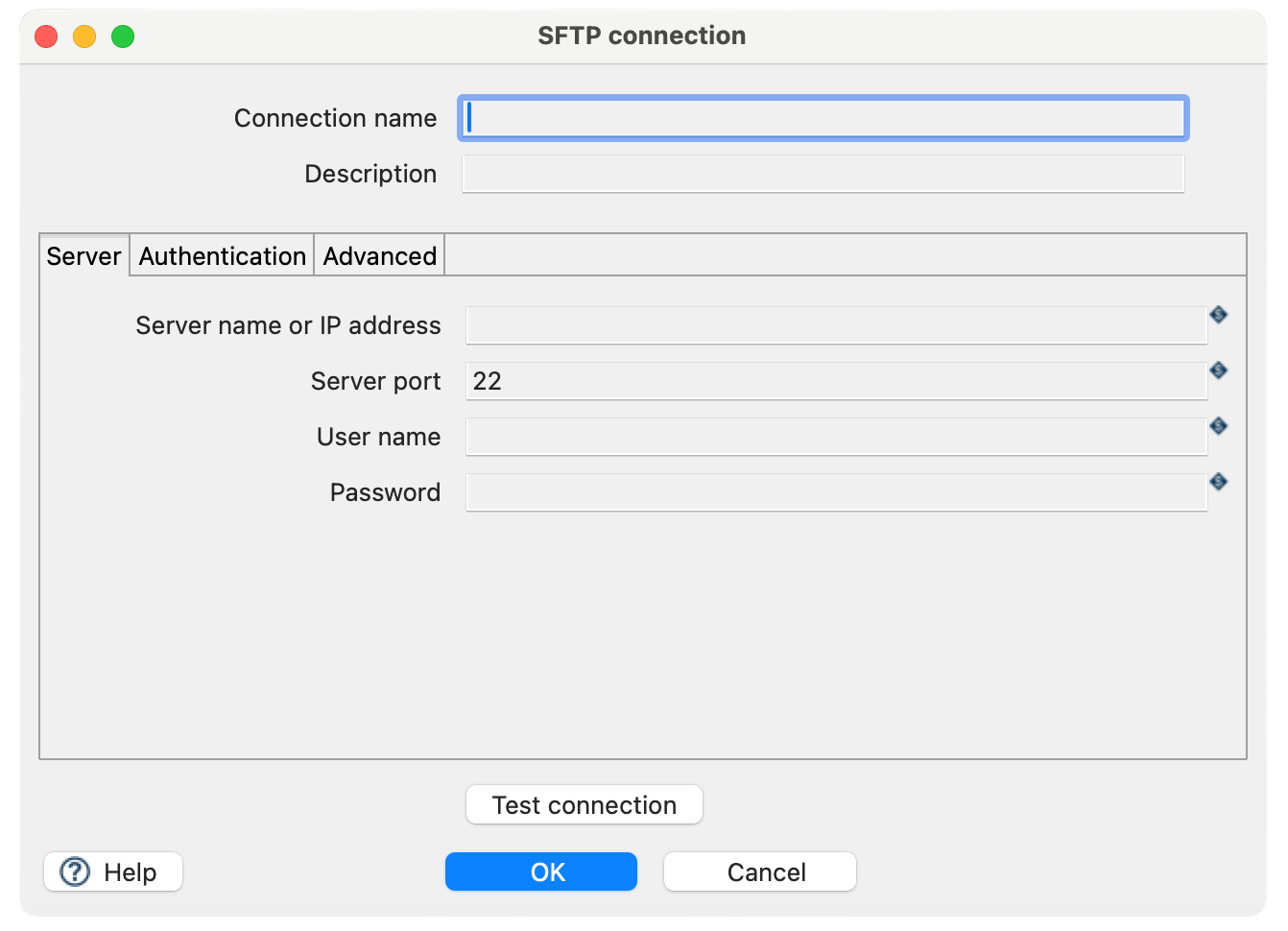
Connections can be configured once and reused across pipelines and transforms, avoiding duplicated connection settings.
Open and edit more file types
The Hop GUI can now open and edit additional file types directly from the IDE, including YAML, sh, cmd, bat, and Markdown files. These files include syntax highlighting, allowing users to manage more of their workflow assets without leaving Hop.
Split view in the UI
The pipeline editor now supports a split view, allowing two areas of a pipeline to be displayed side by side. This makes navigating and editing larger pipelines easier, especially when working with complex workflows.
Redis
Support for Redis Input, Redis Output, and Redis connection metadata has been added in 2.19.
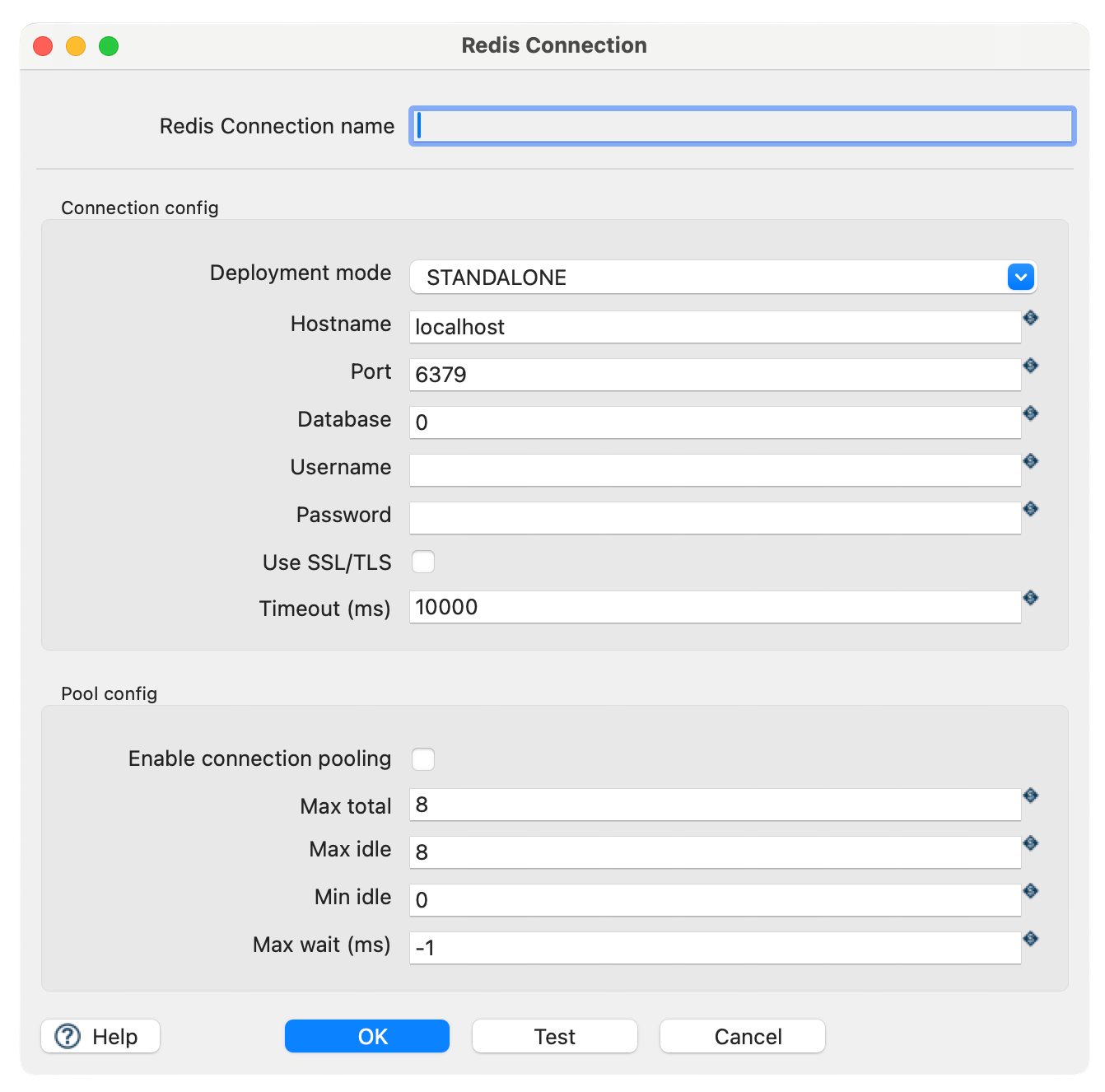
Redis is now available as a native integration in Hop, without requiring custom solutions.
vCard support
vCard Input and Output transforms are now available in Hop, allowing users to read and write contact information using the vCard format.
Notable Bug Fixes
Some of the notable fixes included in Apache Hop 2.19:
-
Hop Server — fixed memory leaks, resource export issues, workflow metrics, and log level handling during remote execution.
-
Unzip action — improved performance when processing large archives containing many small files.
-
Shell states and positioning — shell state information is now restored correctly after restart.
-
Variable and project reload — fixed issues where files could close unexpectedly after environment refresh.
-
Unit tests — improved design-time variable handling, UX, and test stability.
-
Database object quoting — fixed catalog and schema identifier quoting across multiple database types.
-
Pipeline buffer deadlocks — added detection and mitigation for buffer deadlock scenarios.
New contributors
Apache Hop 2.19 includes contributions from six first-time contributors:
Thank you for helping improve Apache Hop and for becoming part of the project community.
Get Apache Hop 2.19 today!
Download Apache Hop 2.19 and explore the new features, improvements, and fixes included in this release.
GitHub Issues
Apache Hop 2.19 includes changes from 337 issues addressed by 22 contributors.
See the Apache Hop 2.19 Milestone and the release notes on GitHub.
Looking forward
Development continues with new improvements already underway. Thank you to everyone contributing code, testing releases, reporting issues, and helping the Apache Hop community grow.